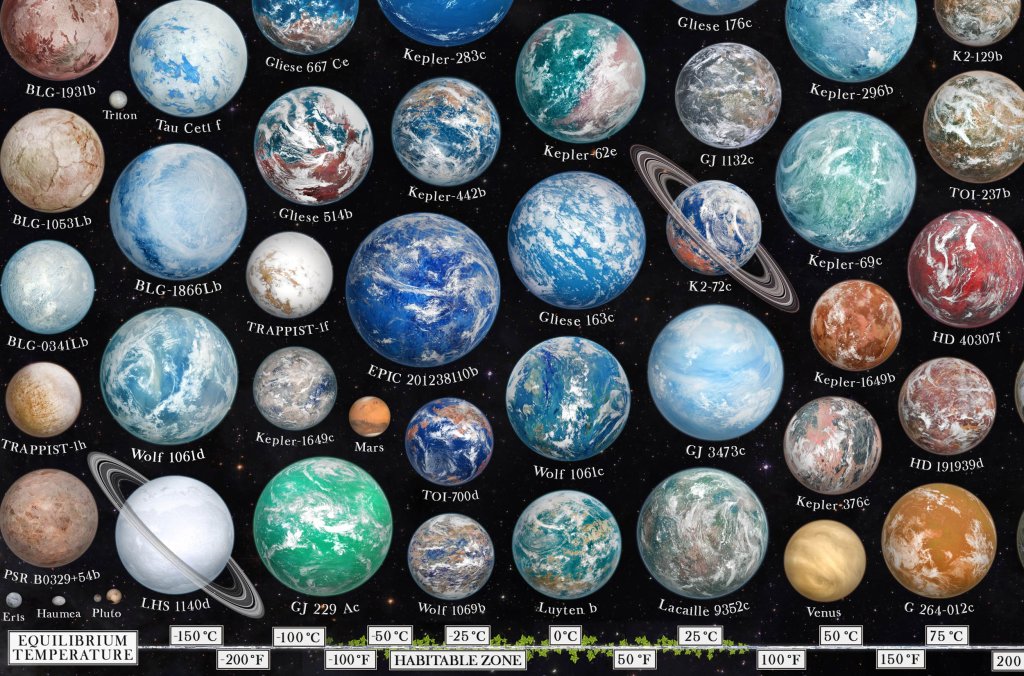
The likelihood of life existing on other planets depends on several factors, including the habitable zone, chemical composition, and probabilities from frameworks like the Drake Equation. Here are some key points:
- Habitable Zone (Goldilocks Zone)
- This is the region around a star where temperatures allow for liquid water, essential for life.
- The zone’s width and position depend on the star’s size and temperature.
- Planetary Conditions
- Chemical Composition: Elements like carbon, hydrogen, nitrogen, oxygen, phosphorus, and sulfur (CHNOPS) are crucial for life.
- Atmospheric Conditions: The atmosphere must retain water and protect against harmful radiation.
- Surface Conditions: Stable temperatures, pressure, and liquid water are necessary.
- Probability Factors
- Abiogenesis Probability: The chance of simple molecules forming complex organic molecules and living cells.
- Drake Equation: Estimates the number of active, communicative extraterrestrial civilizations.
- Astronomical Observations
- Exoplanet Discovery: Missions like Kepler and TESS have found thousands of exoplanets, many in habitable zones.
- Water Detection: Finding water vapor or ice increases the likelihood of life-supporting environments.
While the exact probability is uncertain, life is more likely on planets with Earth-like conditions in the habitable zone, sufficient chemical complexity, and energy sources.
Statistical Probability of Earth-like Planets:
The Kepler Mission found that 20-50% of Sun-like stars have at least one planet in the habitable zone. Note that the observable universe has about 2 trillion galaxies, each with billions of stars. This means that there could be septillions of Earth-like planets.
- Exoplanets are planets that are in the habitable zone and could support life
Here are ten intriguing planets where scientists believe we might find life beyond Earth:




For More Info:


 SCIENCE WITH LARA
Leave a comment