Lara Ertaul
-
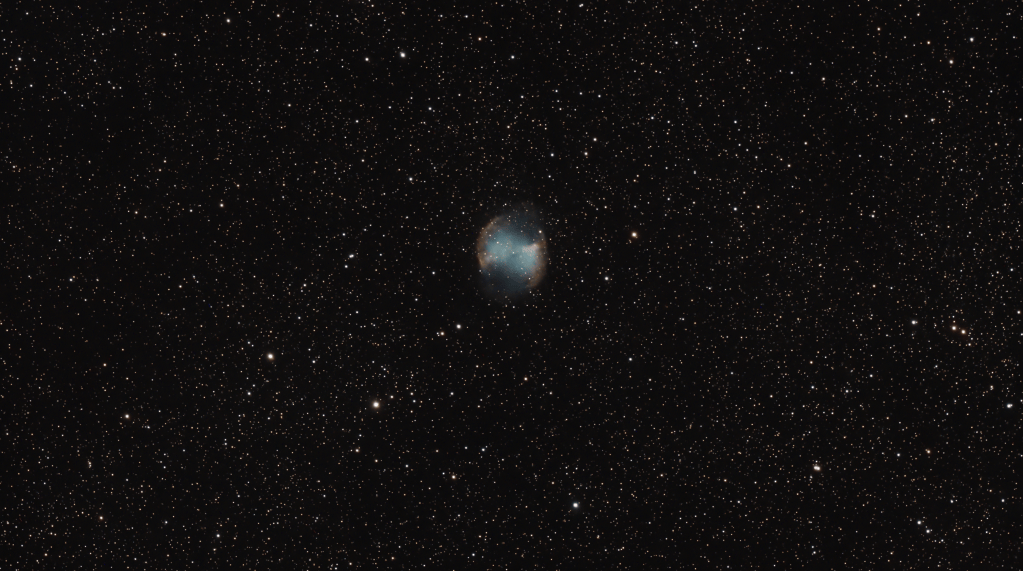
Capturing the Dumbbell Nebula: A Glimpse into the Future of Our Sun
One of the things I love most about astronomy is that looking through a telescope is also a way of looking through both space and time. Recently, I photographed the Dumbbell Nebula (Messier 27, or M27) using my Celestron Origin… Continue reading
-
Roman, Hubble, and Webb: Three Telescopes, Three Ways of Seeing the Universe
A new eye on the universe has begun its journey. On August 30, 2026, at 7:26 a.m. EDT, NASA’s Nancy Grace Roman Space Telescope lifted off from Launch Complex 39A at Kennedy Space Center in Florida aboard a SpaceX Falcon… Continue reading

-
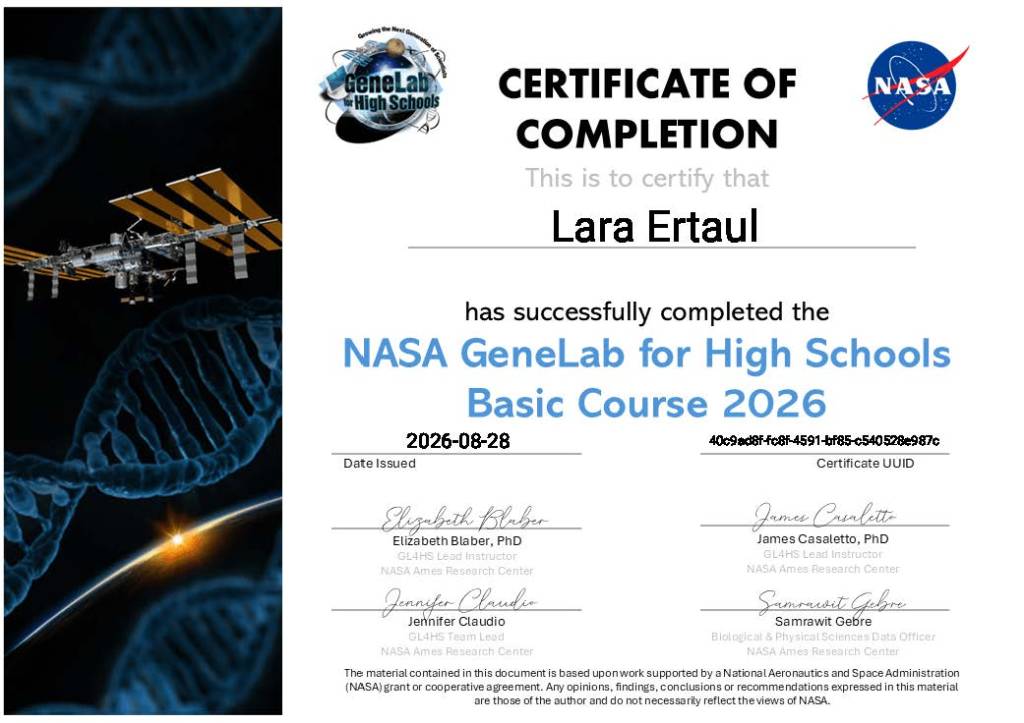
NASA GeneLab for High Schools (GL4HS) 2026
I’m excited to share that I have successfully completed the NASA GeneLab for High Schools (GL4HS) Basic Course 2026, a 12-week summer training program offered through NASA Ames Research Center. I received my Certificate of Completion on August 28, 2026.… Continue reading
-
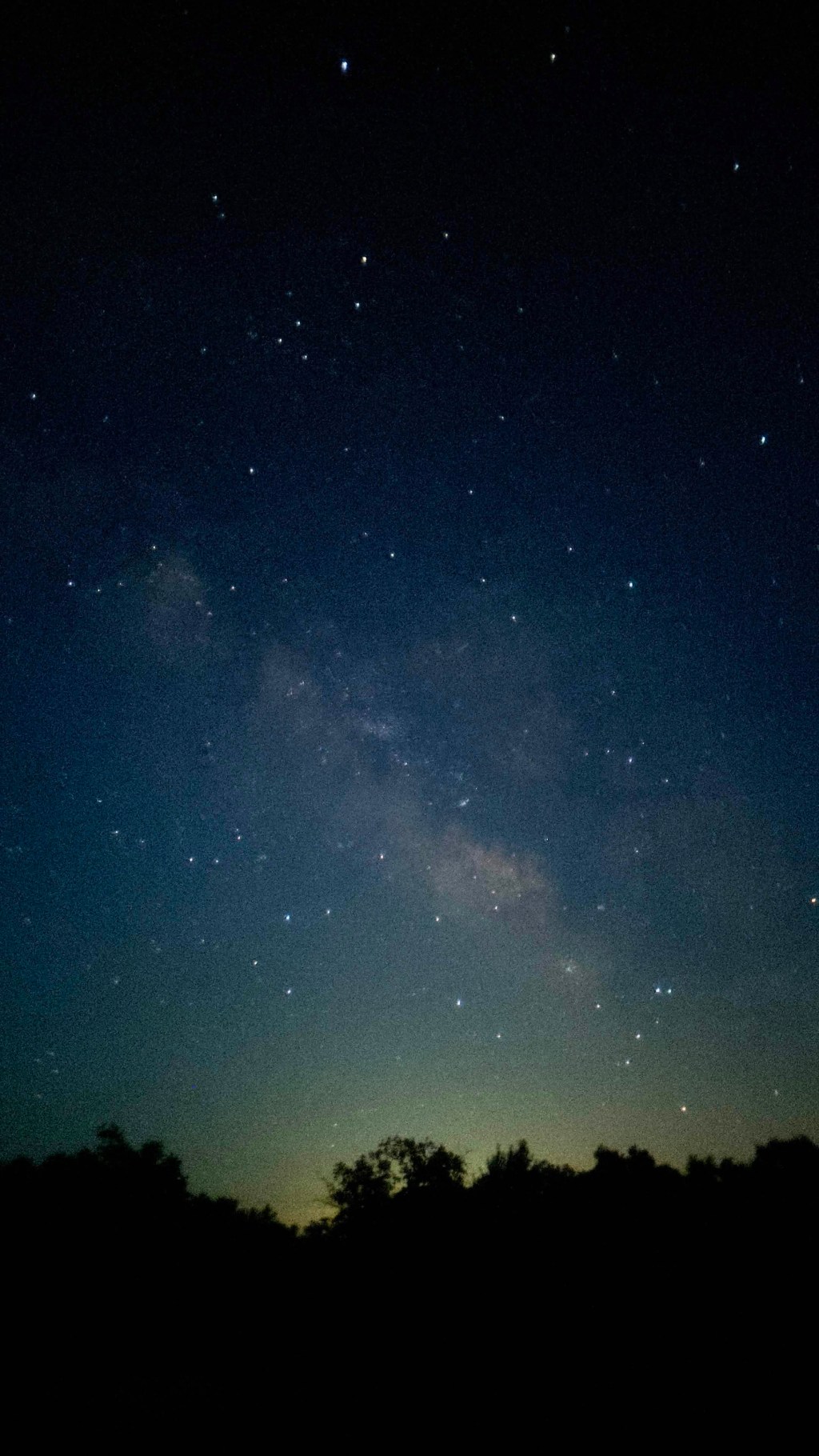
Under the Milky Way at Dye Creek Preserve
I recently had the opportunity to visit Dye Creek Preserve in Northern California, where I experienced something that is becoming increasingly difficult to find: a truly dark night sky. Away from the bright lights of cities and neighborhoods, the difference… Continue reading
-
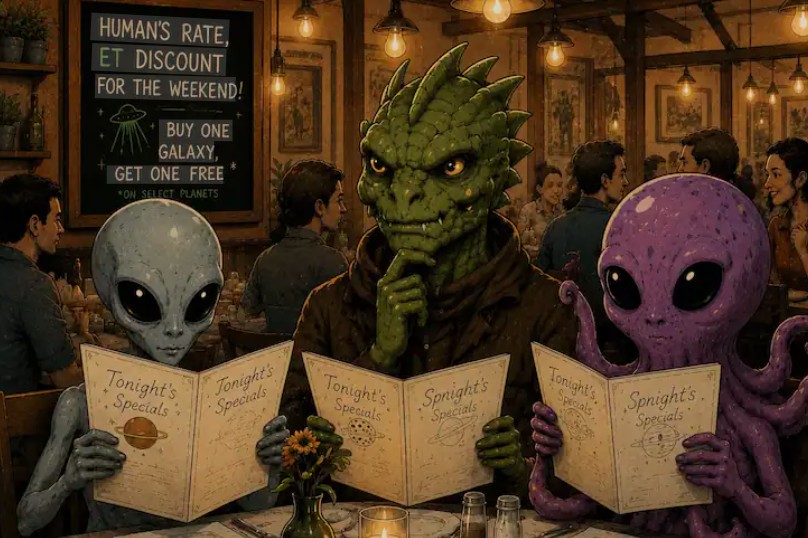
If Aliens Landed on Earth Tomorrow, What Would They Eat?
Imagine waking up tomorrow to the biggest news in human history: an extraterrestrial spacecraft has landed on Earth. After the first questions, Where did they come from? Why are they here? How do we communicate with them?, we might eventually… Continue reading
-
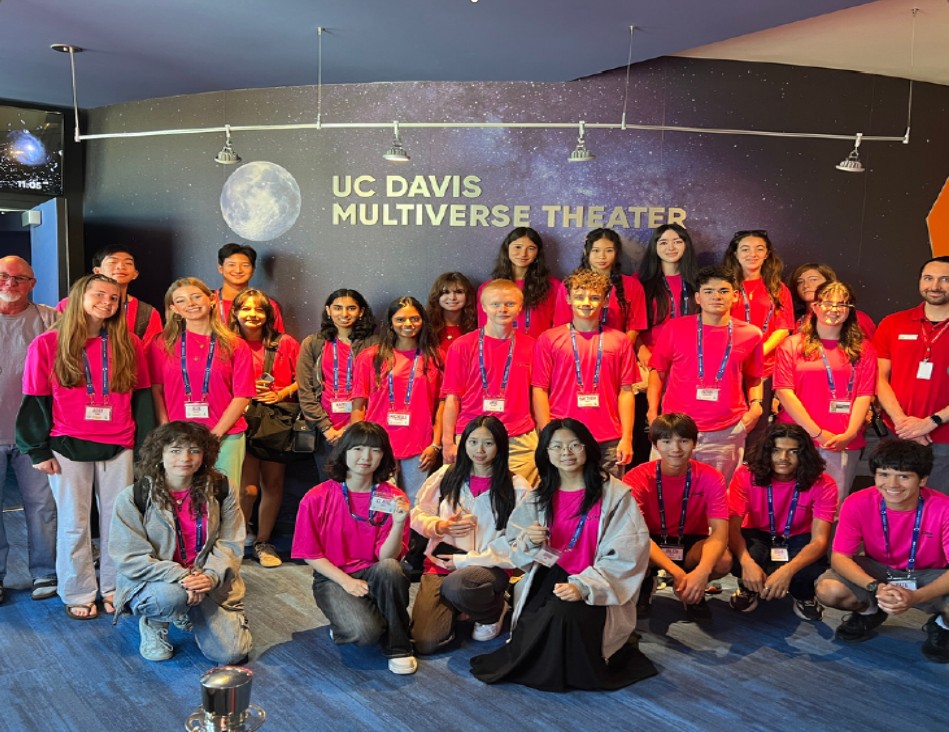
COSMOS: California State Summer School For Mathematics and Science, UC Davis
I’m excited to share that I completed Cluster 4: Introduction to Astrophysics at UC Davis COSMOS this summer! 🌌 Over four weeks, I explored Foundations of Astronomy, Star and Planet Formation, Stellar Evolution, and Cosmology, learning how astronomers combine observations,… Continue reading
-
Measuring Civilizations on a Cosmic Scale: KARDASHEV SCALE
When we think about advanced civilizations, it’s easy to imagine spaceships, futuristic cities, or aliens from science fiction. But astronomers have a much more interesting way of thinking about technological progress: the Kardashev Scale. Proposed by Soviet astronomer Nikolai Kardashev… Continue reading

-
INSIDE THE COMMUNITY (ROTARY) OBSERVATORY
As part of my COSMOS program, I had the opportunity to visit the Community Observatory in Placerville, California. Opened in 2006, the observatory is a wonderful example of how volunteers and the local community can make astronomy accessible to everyone.… Continue reading

-
BOOK REVIEW: Take Me to Your Leader by Neil deGrasse Tyson
Book Review: Take Me to Your Leader by Neil deGrasse Tyson As someone who loves astronomy and spends a lot of time thinking about what might exist beyond Earth, I really enjoyed Take Me to Your Leader by Neil deGrasse… Continue reading

-
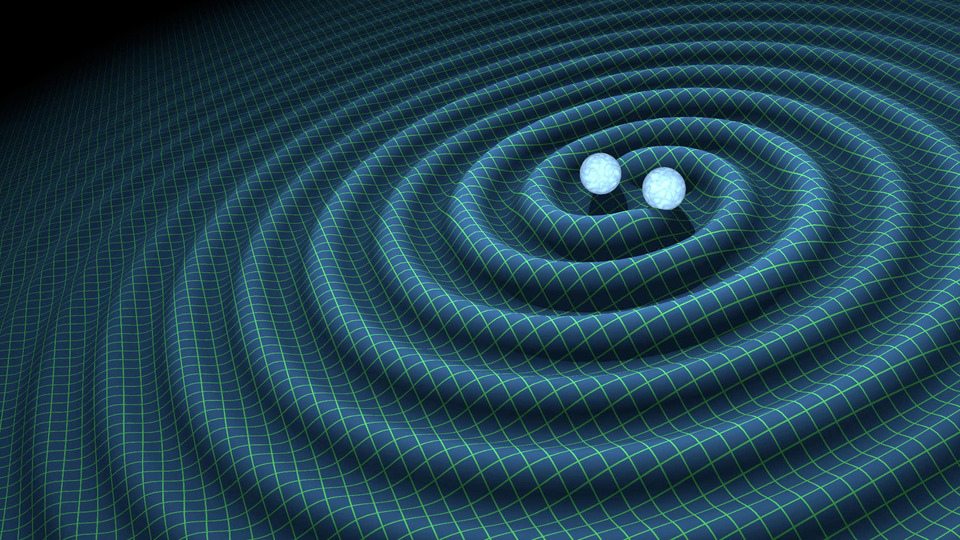
Listening to the Universe: Gravitational Waves — How LIGO Detects Them
For centuries, astronomers have explored the universe by observing light. Telescopes have allowed us to see planets, stars, galaxies, and nebulae. But what if we could study the universe without relying only on light? Today, scientists can do exactly that… Continue reading
 SCIENCE WITH LARA