
Did NASA’s Perseverance Rover Discover Signs of Ancient Life on Mars?
In 2025, one of the most exciting moments in astrobiology came from NASA’s Perseverance rover as it continued exploring Mars. While studying Jezero Crater, a region that once contained a lake and a river delta, the rover observed unusual
rock features nicknamed “leopard spots.” These dark, spotted patterns in Martian rocks have captured scientists’ attention because of how similar they look to structures associated with microbial activity on Earth.
The leopard spots are found in rocks that also contain organic molecules, which are the chemical building blocks of life. On Earth, similar patterns can form when microbes interact with minerals in watery environments. This makes the
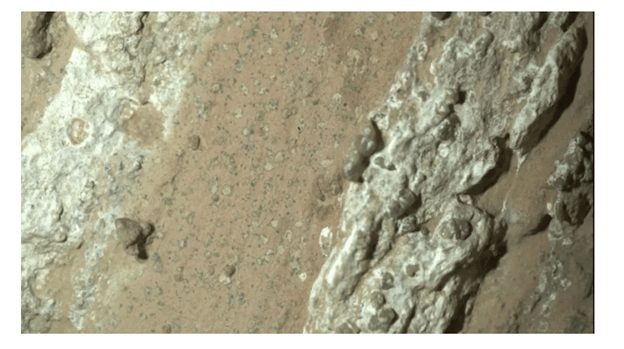
discovery especially interesting, since Jezero Crater was likely wet billions of years ago and may have provided conditions suitable for life.
Still, scientists are being cautious. Leopard spots are not direct proof of ancient life. Non-living chemical reactions can sometimes create similar patterns without biology being involved. Perseverance’s instruments can identify promising clues, but they cannot yet confirm whether these features were truly formed by living organisms.
To help answer this question, Perseverance has collected rock samples containing the leopard spots and sealed them for possible return to Earth. Future laboratory studies could reveal whether these markings are the result of biological processes or purely chemical ones.
Even without a final answer, the discovery of leopard spots is a major breakthrough. It strengthens the idea that Mars was once habitable and brings scientists closer to understanding whether life ever existed beyond Earth.

 SCIENCE WITH LARA
Leave a comment