For centuries, astronomers have explored the universe by observing light. Telescopes have allowed us to see planets, stars, galaxies, and nebulae. But what if we could study the universe without relying only on
light? Today, scientists can do exactly that by detecting gravitational waves, tiny ripples in the fabric of spacetime itself.
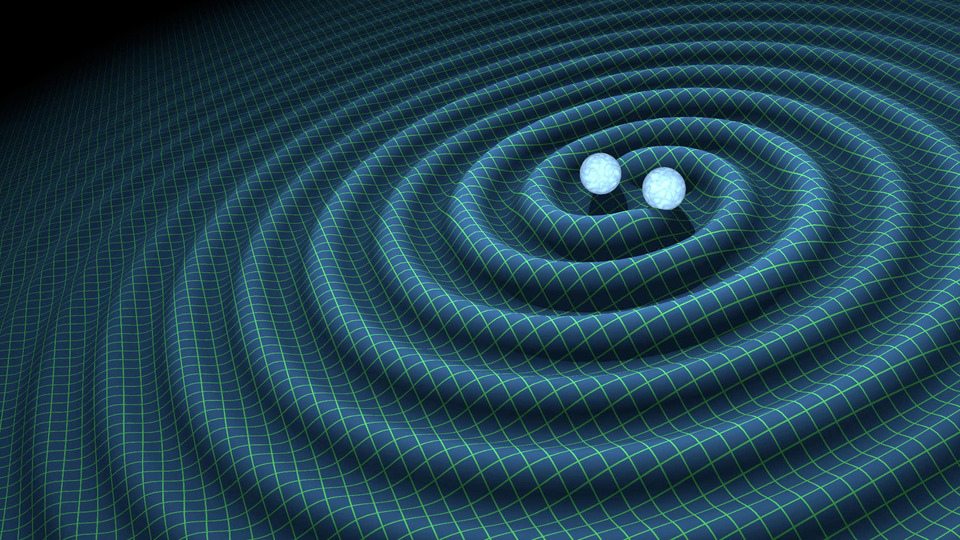
Gravitational waves were first predicted by Albert Einstein in 1916 as part of his General Theory of Relativity. They are produced when massive objects accelerate through space, especially during dramatic events such as the collision of black holes or neutron stars. These events create ripples that travel outward at the speed of light, carrying information about their source across the universe.
To visualize how gravitational waves move through spacetime, watch the above animation from the LIGO
A useful analogy is to imagine dropping a stone into a calm pond. The impact creates ripples that spread outward across the water. In a similar way, collisions between massive objects create ripples that travel through spacetime.
Einstein’s Equation and Gravitational Waves
Gravitational waves are a prediction of Einstein’s General Theory of Relativity, which describes gravity as the curvature of spacetime rather than as a traditional force.
The central equation of the theory is called the Einstein Field Equation:
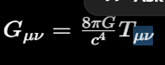
Although the equation may look intimidating, its basic meaning is surprisingly simple:
Matter and energy tell spacetime how to curve, and curved spacetime tells matter how to move.
The left side of the equation describes the geometry, or curvature, of spacetime. The right side describes the matter and energy present in the universe.
When massive objects accelerate—such as two black holes orbiting each other—the curvature of spacetime changes. These changes can travel outward through space as waves, much like ripples spreading across a pond. These traveling ripples are what we call gravitational waves.
How Does LIGO Detect Gravitational Waves?
Detecting gravitational waves is one of the greatest engineering challenges ever accomplished. By the time these ripples reach Earth, they change distances by an amount far smaller than the width of a proton.
The Laser Interferometer Gravitational-Wave Observatory (LIGO) consists of two giant L-shaped detectors located in Hanford, Washington, and Livingston, Louisiana. Each detector has two perpendicular arms that are 4 kilometers (2.5 miles) long.
LIGO works using a device called a laser interferometer:
- A powerful laser beam is split into two identical beams.
- Each beam travels down one of the detector’s arms.
- The beams bounce off highly polished mirrors and return to the starting point.
- The returning beams are combined and compared.
Under normal conditions, the two beams travel exactly the same distance. However, when a gravitational wave passes through Earth, it slightly stretches one arm while compressing the other. This tiny difference changes the travel time of the laser beams. By measuring this change, LIGO can detect the passing gravitational wave.
Scientists describe this stretching and squeezing using a quantity called strain, given by the equation:
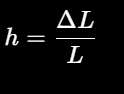
where:
- h is the strain (the strength of the gravitational wave),
- L is the original length of the detector arm,
- ΔL is the tiny change in length caused by the wave.
For LIGO, the strain is typically around (10-21), meaning that a 4-kilometer detector arm changes length by only a tiny fraction of the diameter of a proton when a gravitational wave passes by.
One of the best explanations of this process is provided in the following animation:
How LIGO Works: The Most Precise Ruler Ever Constructed
The animation exaggerates the stretching and squeezing of space so it can be seen clearly. In reality, the effect is incredibly small, requiring some of the most precise measurements ever made by humans.
A Historic Discovery
On September 14, 2015, LIGO made the first direct detection of gravitational waves. The signal came from two black holes that collided approximately 1.3 billion light-years from Earth. The discovery confirmed Einstein’s century-old prediction and opened an entirely new field known as gravitational-wave astronomy.
For the first time, scientists were able to study the universe using something other than electromagnetic radiation such as visible light, radio waves, or X-rays. Instead, they could observe the actual motion of spacetime itself.
The Future of Gravitational-Wave Astronomy: LISA
While LIGO observes gravitational waves from Earth, the next generation of detectors will move into space. One of the most ambitious future missions is the Laser Interferometer Space Antenna (LISA), a joint project of the European Space Agency (ESA) and NASA.
LISA will consist of three spacecraft flying in a triangular formation, separated by approximately 2.5 million kilometers. Laser beams traveling between the spacecraft will measure tiny changes in distance caused by passing gravitational waves.
Unlike LIGO, which is most sensitive to collisions of stellar-mass black holes and neutron stars, LISA will detect lower-frequency gravitational waves produced by:
- Merging supermassive black holes
- Compact binary star systems
- Extreme-mass-ratio inspirals
- Potential signals from the early universe
To visualize how LISA will operate in space, watch this animation:
Together, LIGO and LISA will allow astronomers to observe a much wider range of gravitational-wave sources, providing new insights into the most energetic and mysterious events in the cosmos.
Listening to the Cosmos
The discovery of gravitational waves has transformed astronomy. For centuries, humanity could only see the universe. Now, we can also listen to it.
Every gravitational-wave detection tells the story of a distant cosmic event that may have occurred millions or even billions of years ago. These faint ripples travel across the cosmos until they reach Earth, where instruments like LIGO can measure them with astonishing precision.
As observatories such as LIGO and LISA continue to explore the universe, they may help answer some of the biggest questions in modern astrophysics, from the nature of black holes to the origins of the cosmos itself.
Further Exploration
What Are Gravitational Waves?
https://www.ligo.caltech.edu/video/gravitational-waves
How Does LIGO Work?
https://www.youtube.com/watch?v=tQ_teIUb3tE
How Will LISA Work?
https://www.youtube.com/watch?v=yLRIJKhSl4Q
LIGO Scientific Collaboration
https://www.ligo.org
LISA Mission
https://www.lisamission.org/


 SCIENCE WITH LARA
Leave a comment