This summer at Harvard Summer School, while taking A Short Tour of the Universe Guided by Einstein and Others with Prof. Dr. Arvind Borde, I decided to read Carlo Rovelli’s book White Holes. From the very first pages, I was completely fascinated. The way Rovelli describes white holes, these mysterious time-reversed twins of black holes, made me feel like I was stepping right into the questions I was exploring for my final project. It was not just a book of physics; it felt like a journey into imagination
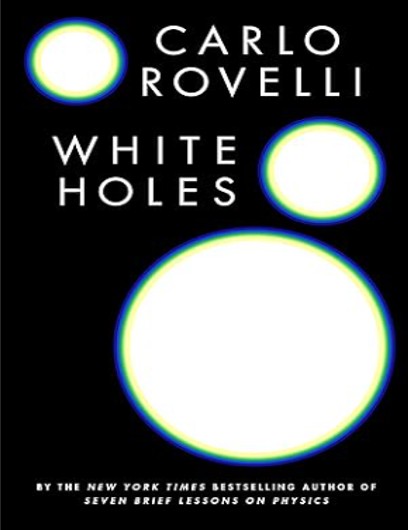
where science and wonder blended together.
What excited me most was how Rovelli explained ideas I had just studied in class, like the black hole information paradox and the possibility of black holes tunneling into white holes, in such a clear and poetic way. I remember reading about the concept of a quantum “bounce” and feeling this rush of recognition, thinking, “Yes, this is exactly what I have been learning.” Rovelli went beyond the math and diagrams. He brought in philosophy, literature, and a sense of mystery that made me stop and think not only about physics but also about the meaning of time and reality itself.
By the end, I felt inspired and motivated. I loved that the book showed me that science is not just equations, it is also about curiosity, creativity, and daring to imagine the impossible. Reading White Holes alongside my Harvard course made the topic come alive in a way I will never forget. It confirmed for me why I want to keep studying astrophysics: because the universe is not only vast and complex, but also endlessly full of wonder.


 SCIENCE WITH LARA
Leave a reply to craftyfortunatelyc81d1bc093 Cancel reply